
Opinion: Tobacco smoking in Sri Lanka, going the last mile
Chathurga Karunanayake and Chamini Thilanka
Despite multiple measures by
successive governments to bring down tobacco prevalence in Sri Lanka, still
more than one in four males use tobacco. Reducing smoking prevalence is also
identified as one of the concerns in the manifesto
of the newly elected president of Sri Lanka.This blog argues that bringing down tobacco prevalence further will entail
tightening tobacco control policies and initiating focused measures targeting
difficult-to-reach groups.
Sri Lanka’s
Journey to Reduce Smoking Prevalence
Smoking is a dangerous epidemic, claiming more than eight million lives each year globally, out of
which 1.2 million victims are non-smokers. As highlighted by the
latest WHO global report on trends in prevalence of tobacco
use 2000-2025,
the number of annual deaths is expected to keep
growing even after rates of tobacco use start to decline, because
tobacco-related diseases take time to show symptoms. According to the National
Authority on Tobacco and Alcohol (NATA), currently, over 1.5 million Sri Lankans smoke as much as 11 million cigarettes daily. The
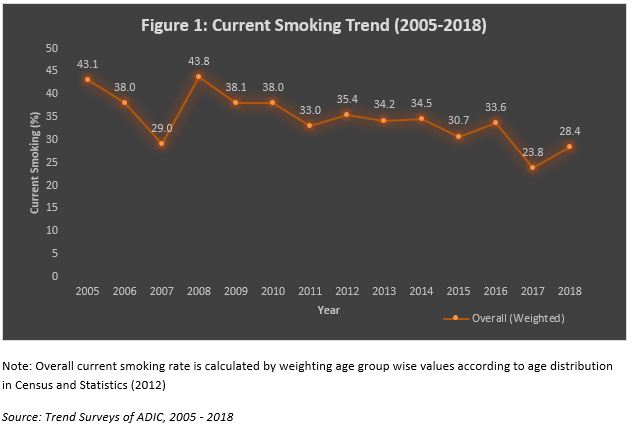
high number of current male smokers who are 15 years and above, amounting to 28.4%, is
concerning, given the high health, social, environment, and economic costs incurred
by the country due to tobacco. For instance, in 2015, Sri Lanka incurred
a cost of Rs. 89 billion, owing to both direct and indirect costs of tobacco. Of
this, cancers and other non-communicable diseases caused by tobacco play a
major role. Every year, more than 12,300
Sri Lankans die due to tobacco-related diseases.
Realising its dangers, successive governments have committed
to controlling tobacco prevalence in the country. Sri Lanka was the first in the South Asian region and
the fourth in the world to ratify the WHO Framework Convention on Tobacco
Control (FCTC) in
2003. Since then, Sri Lanka has taken
several measures to control tobacco use. These
include banning smoking in public places, barring the sale and promotion of
tobacco for youth under 21 years of age, banning tobacco advertising,
promotions, and sponsorships, prohibiting tobacco vending machines, and implementing
a mandatory health warning covering 80% of cigarette packs. Sri Lanka’s strong
commitment to combat tobacco has resulted in a significant decline in smoking
rates, from 43.1% in 2005 to 28.4% among males in 2018 (Figure 1).
However, this percentage is still considerably high.
The Remaining
Stock of Smokers in Sri Lanka
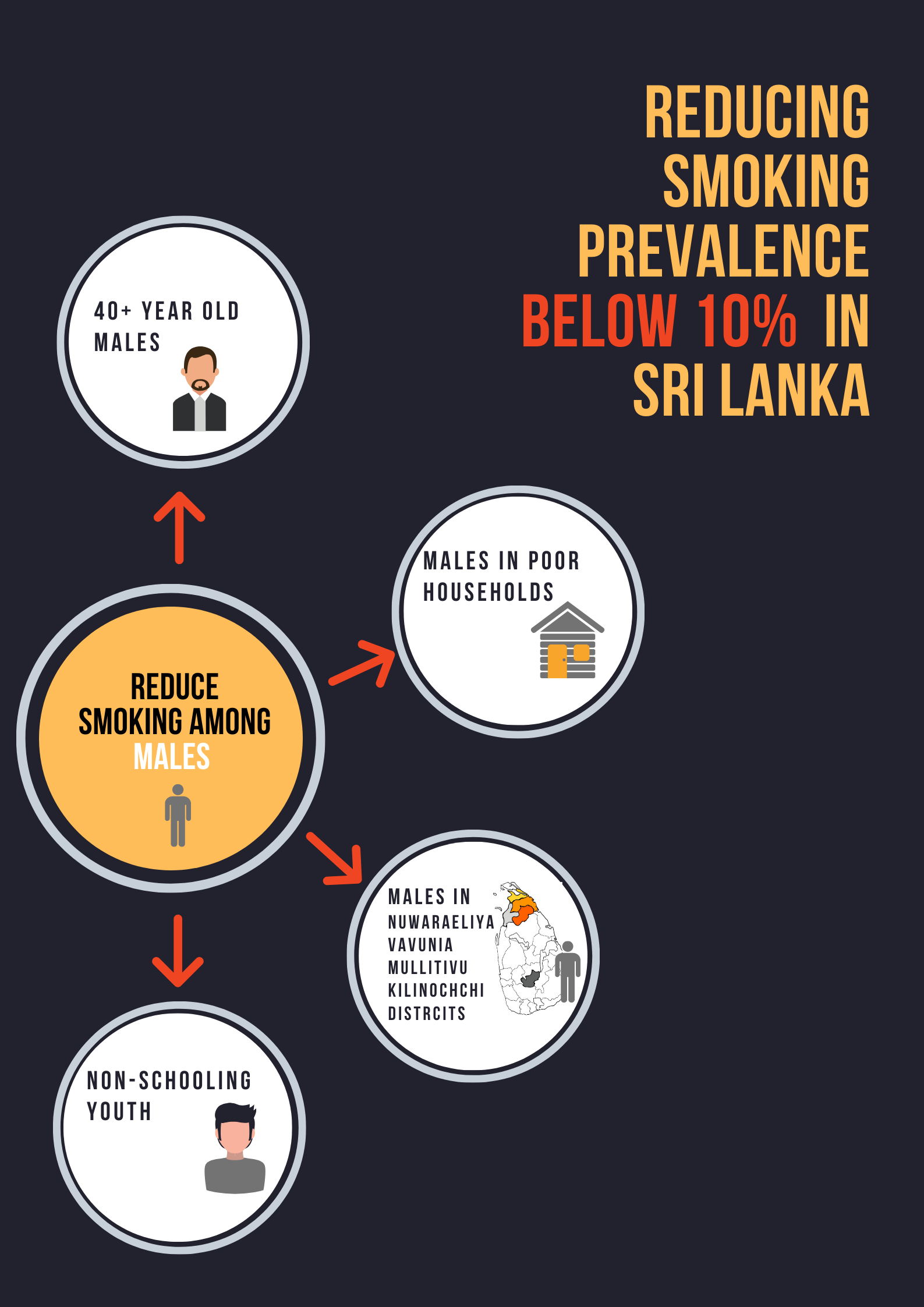
Although smoking prevalence in Sri Lanka has reduced over time, it is high among certain groups. For instance, there is a strong gender disparity in smoking prevalence, where smoking is significantly higher among males compared to females (29.4% versus 0.1% in 2018, respectively). Among males, smoking prevalence is highest amongst 40 years plus males (in 2018, smoking prevalence was 31.9% for 40 years plus males compared to 21.5% for 15 – 24 year olds, and 28.6% for 29 – 39 year olds). Among school aged males, smoking prevalence is higher amongst non-schooling males (in 2016, 23.9% compared to the 4.3% among the schooling group). Among schooling males smoking prevalence is higher amongst 16-17 year olds compared to the 13-15 year olds (10.9%versus 4.2%in 2016, respectively).
Across income groups, smokers are more likely to come from households in the lowest wealth quintile. Across occupation categories, Skilled Agricultural and Fishery Workers (in 2018, of the Skilled Agricultural and Fishery Workers, 42.9% were current smokers) and Craft and Related Workers (in 2018, of the Craft and Related Workers, 41.6% were current smokers) record high prevalence rates. Across sectors, the rural sector has a higher share of households with at least one smoker (34.5% for rural sector compared to the 31.6% for estate and urban sectors in 2016). Nuwara Eliya, Vavuniya, Mullaitivu, Mannar, and Kilinochchi districts recorded the highest percentage of detected smokers in 2016.
Reaching
the Remaining Stock
The above data shows that existing tobacco control measures
have not been effective in reducing tobacco prevalence among certain groups.
This suggests the need for more targeted measures to reach different groups.
Ongoing IPS research suggests
that different groups continue to smoke for different reasons; older people smoke
due to addiction, loneliness, and monotonous life styles, while youth turn to
cigarettes due to peer pressure. The nature of employment (drivers, fishermen,
construction workers) also influence smoking initiation, given peer pressure
and social practices. Such prevalence rates are largely visible amongst males,
making it necessary to target males in tobacco control programmes.
In terms of reducing smoking
prevalence in the lowest income cohort, IPS field research confirms findings by
the NATA and the Alcohol and Drug Information Centre (ADIC) that banning single
stick cigarettes, which are popular among low income-earning males, is
important. Single stick cigarettes circumvent the
health warnings on packs and are more
affordable.
Toll free helplines for quitting
smoking, counselling programmes at the school level, and training teachers to
discourage young smokers will be helpful in tackling the prevalence
among youth.
In terms of lowering prevalence
among the rural community, further expanding current programmes such as ‘smoke
free villages and zones’, with the help of public health inspectors and
gramasevaka officers (village heads), is important. Furthermore, according to
expert advice in the field, these programmes become more effective when the
community is actively involved, especially at the grass root level.
In general, increasing the cost of tobacco
through taxation, one of the six key components of the policy package ‘MPOWER’
introduced by the WHO will continue to play an important role in tackling the
‘last mile’ of smokers in Sri Lanka. Reducing the affordability of cigarettes by
increasing the price helps to control smoking prevalence in Sri Lanka in three ways; it will discourage current
smokers from purchasing cigarettes, reduce the tendency of new smokers to start,
and prevent the quitters from restarting. However, it is important that this
price increase is done systematically through income and inflation adjusted
taxation, so that the affordability of cigarettes does not increase.
Furthermore, as highlighted in Tobacco
Unmasked, the government should strengthen
the policies that are in place already, such as the ban on promotion,
advertising, and sponsorship. The Abhisheka
certificate – a trade loyalty programme of the Ceylon Tobacco Company (CTC) to
encourage cigarette retailers
is one example of indirect promotion. IPS research also confirms the
revelations made by Tobacco Unmasked
and ADIC on the policy gaps in the ban on selling cigarettes to minors. Anecdotal
evidence suggests that it is not implemented fully in many areas across the
country as there are still many youngsters below 21 years of age who smoke on a
daily basis.
Policy Implications
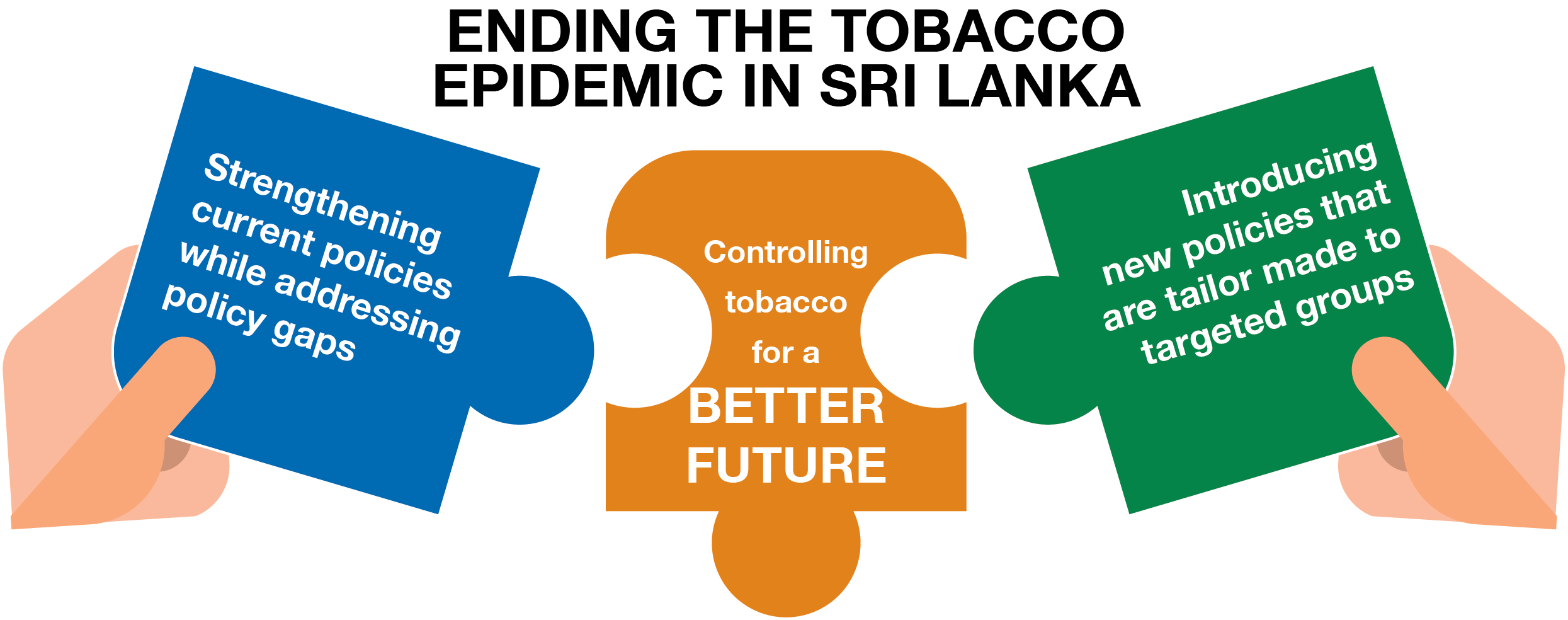
A deeper understanding of the remaining stock of smokers provides a stepping stone to identify the most suitable tobacco control policies for different users from different backgrounds. There is no ‘one size fits all’ solution to tackle this issue and as such, the government will have to focus on introducing policies that are tailor made to suit these targeted groups. It should be noted that policies alone are not sufficient, and there need to be effective ways to implement the policies as well.