
Taxing Tobacco: Why the 2023 Budget Should Increase Tobacco Taxes
By an IPS Research Team
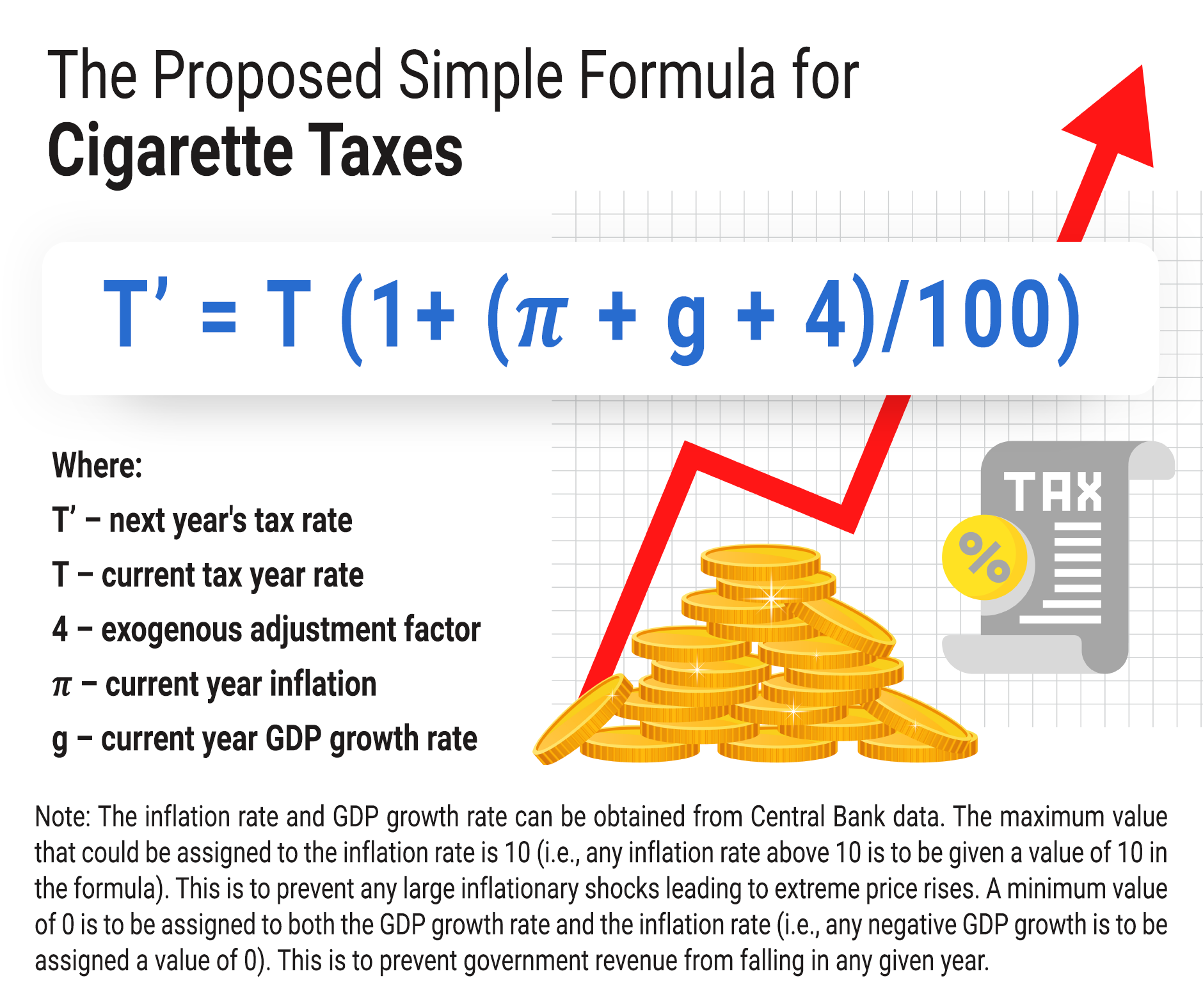
Sri Lanka’s economy is at a critical juncture where urgent steps are needed to improve the country’s fiscal position. The Institute of Policy Studies of Sri Lanka (IPS) has maintained that increasing tobacco taxation has undeniable health and fiscal benefits. In this context, policy solutions, such as taxing tobacco which can be leveraged to boost government revenue without threatening economic growth, are essential. This blog argues that the 2023 Budget should introduce a model of indexation which automatically links tobacco taxation rises with the size of the economy and inflation. This would raise substantial additional revenue from the excise tax on cigarettes.
The Right Time to Raise Taxes
The
current economic crisis and the intense pressure on the health system mean
there is no better time to raise tobacco taxes in Sri Lanka. Among the benefits of
increasing tobacco taxes are the generation of additional revenue for the
government, widespread
support among the public for an increase in tobacco taxation,
and the reduced burden on Sri
Lanka’s struggling health system.
A tax
targeting a ‘sin product’ like tobacco will contribute to the government’s
ongoing efforts to help raise revenue without increasing the costs of essential
goods at a critical time for the economy. According to a poll conducted by the Alcohol and Drug Information Centre (ADIC) in
September 2021, 91.5% of respondents said they would support increasing
tobacco taxation to boost government revenue. Accordingly, this is a tax move
the government can introduce, which will have a near-universal
public endorsement. Further, driving down tobacco consumption
by increasing prices, particularly of the most harmful cigarettes, will reduce
tobacco-caused illnesses and ease pressure on the health system when Sri Lanka’s
healthcare system is facing severe medical shortages due to the economic
crisis.
A Complex Tobacco Taxation System
Taxation
is internationally recognised as the most cost-effective means to reduce
tobacco consumption, given the revenue generated by tobacco taxation. The World
Health Organization Framework Convention on Tobacco Control (WHO FCTC)
recommends simple, inflation-adjusted taxes to reduce tobacco use and
prevalence. In the past, in line with these global best practices, Sri Lanka
has taken several positive measures to control tobacco use, including tax
increases leading to significant revenue boosts for the government as public
health benefits for the population.
Sri Lanka, however, has complex tobacco taxation practices in
place. Cigarettes in Sri
Lanka are taxed at five different excise duty
rates based on the length of the cigarette.
Moreover, in Sri Lanka,
tobacco taxation has not kept pace with inflation and per capita income, which
has made cigarettes more affordable. This has resulted in adverse health
outcomes and deprived the government of considerable revenue, which could have
been invested in key priorities.
Introduce a Single Tax for Cigarettes