
Advancing Human Capital for Durable Growth: Policy Priorities for Sri Lanka
By Sunimalee Madurawala, Research Economist, Institute of Policy Studies of Sri Lanka (IPS)
The Sri Lankan economy has stabilised following a series of repeated shocks, including the COVID-19 pandemic, the economic crisis, and climate-related disasters. While economic activity has recovered, an important question remains: what will it take to sustain growth and make it durable? The 2026 edition of the Sri Lanka State of the Economy (SOE), the annual flagship publication of the Institute of Policy Studies of Sri Lanka (IPS), outlines the policy choices the country must make to sustain long-term growth.
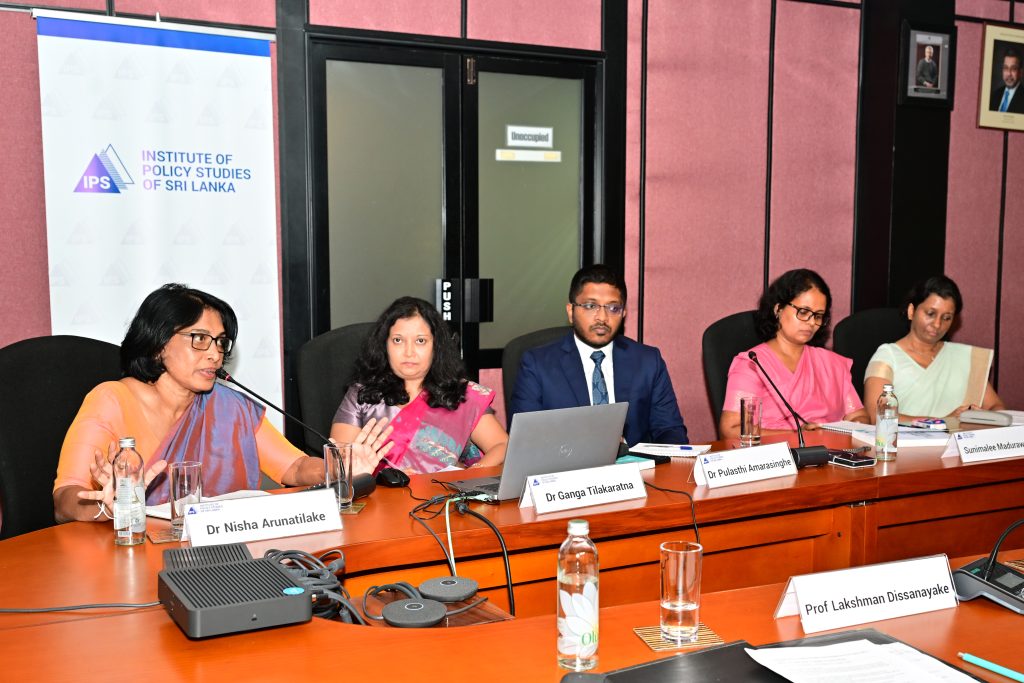
To mark the release of SOE 2026, IPS hosted a roundtable discussion on 20 October, titled “Durable Growth: Advancing Human Capital for Inclusive Prosperity.” The discussion focused on policy priorities needed to equip citizens with skills, opportunities, and resilience to drive productivity and ensure that the benefits of economic growth are shared more widely across society. IPS Director of Research, Dr Nisha Arunatilake, and Research Fellows Dr Pulasthi Amarasinghe and Dr Ganga Tilakaratne presented five chapters of the report. Emeritus Professor Lakshman Dissanayake, Senior Professor in Demography; Mr Erandika Dissanayake, Director General of the Sri Lanka Export Development Board; Professor Emeritus Kalinga Tudor Silva; and other distinguished invitees followed with interventions.
Higher Education: Expanding Access and Aligning Skills with Labour Market Needs
Dr Nisha Arunatilake emphasised that strategically developing the tertiary education sector is essential to durable growth. Although Sri Lanka’s tertiary-educated population more than doubled between 2012 and 2024, and the share of adults aged 25 and over with such a qualification increased by 2.8 percentage points over the period, growth has trailed regional peers. Growth has also been uneven, with basic degrees accounting for 87% of that growth, while postgraduate and technical qualifications remain thin. According to the International Labour Organization, all knowledge workers—such as managers, professionals, and technicians—are expected to have a tertiary education. However, only 34.1% did so. Gender disparities favouring women were also evident. Women make up about 57% of the tertiary-educated, but many were concentrated in occupations such as teaching, with relatively limited representation in science, engineering, and ICT, despite the higher wage returns associated with STEM qualifications.
Tertiary education can fuel innovation-led growth, but only if graduate skills match the jobs on offer. To expand and diversify tertiary education over the long run, Dr Arunatilake identified several near-term policy priorities, including improving the tracking of graduate output and employment outcomes, strengthening alignment between qualifications and industry demand, and expanding programmes in high-demand fields.
The Labour Market: Challenges Beyond Unemployment
Turning to the labour market, Dr Pulasthi Amarasinghe examined developments between 2019 and 2024, highlighting that the recovery in output and a relatively stable unemployment rate mask persistent challenges in employment quality and productivity. Shifts in employment across sectors have weighed on overall labour productivity growth, while the recovery has been uneven across different groups of workers.
Informality, along with structural obstacles to formalisation, remains a major concern, with two-thirds of workers in informal employment. Around 1.95 million informal workers are in agriculture and fisheries and are vulnerable to climate-related shocks. To tackle this, Dr Amarasinghe proposed a three-part agenda: better skills matching through employer-linked training and vacancy information; expanding formal employment through incentivising formal job creation; and stronger income security through real wage protection and better social protection benefits linked to labour markets.
Protecting Households and Preparing for an Ageing Society
Dr Ganga Tilakaratne highlighted the need to strengthen shock-responsive social protection. The Household Shock Exposure Index, which covers 13 types of shocks, found that 11.4% of households faced high cumulative exposure and 56.5% moderate exposure. Half of all households received support from at least one social protection programme and 29.5% from Aswesuma. Yet coverage does not rise with shock exposure: among households in the bottom expenditure quintile with high shock exposure, only 55% received benefits, leaving 45% without cover. Dr Tilakaratne recommended enhancing the existing social registry to make it more dynamic and better integrated with disaster management and climate information systems, establishing mechanisms to scale up assistance during crises, strengthening digital payment systems, and expanding productive inclusion initiatives.
Discussing the country’s silver economy, Dr Tilakaratne noted that Sri Lanka is South Asia’s fastest-ageing country, with the share of people aged 60 and over expected to increase from 18.3% in 2024 to 23.1% by 2042. The health system faces gaps in meeting the needs of this growing population, including shortages of geriatric care, fragmented health information, medicine supply disruptions, and a lack of long-term care financing. She emphasised the importance of developing a health-centred silver economy through strengthened primary healthcare, improved access to quality healthcare through greater use of digital health and ICT while addressing older adults’ digital literacy, and enhanced financial protection through reduced out-of-pocket costs and sustainable long-term care financing.
Voices from the Roundtable: Jobs, Care, and Reform
The participating stakeholders joined in the discussion following the presentations. Emeritus Professor Lakshman Dissanayake observed that policy attention has focused on labour supply while jobs also depend on employer needs, highlighting that the demand side of the labour market deserves equal attention. He called for strong partnerships between higher education institutions and the private sector so that graduate skills are better aligned with labour market needs. He additionally suggested developing the caregiving economy to tackle low female labour force participation while meeting the rising demand for elderly care. Mr Erandika Dissanayake stressed the connection between skills, productivity, and innovation, and noted that social protection should also address vulnerabilities faced by skilled workers. He highlighted the importance of sustainable financing arrangements to meet the social protection needs of an ageing population. Participants also raised supply-side labour market concerns, such as low female labour force participation, population ageing, and the urgent need to reform outdated labour laws to enable employers to swiftly respond to shocks. The discussion also highlighted the importance of aligning reforms in education, labour markets, and social protection with broader macroeconomic priorities to support durable growth.
The Way Forward: Putting People at the Centre of Growth
The roundtable highlighted that durable growth cannot rest on economic recovery alone and requires coordinated policy action across education, labour markets, social protection, and healthcare. Strengthening links between higher education institutions and employers can help improve the alignment of graduate skills with labour market needs. Similarly, expanding opportunities for productive formal employment and strengthening income security remain important priorities. Improving the responsiveness of social protection systems to household vulnerabilities and preparing healthcare and care services for an ageing population are equally important for ensuring inclusive and sustainable growth. Together, investments across all three areas can help Sri Lanka translate its economic recovery into durable and inclusive growth while strengthening resilience to future shocks.