
Sri Lanka invites Indian businesses to partner in its next phase of economic growth
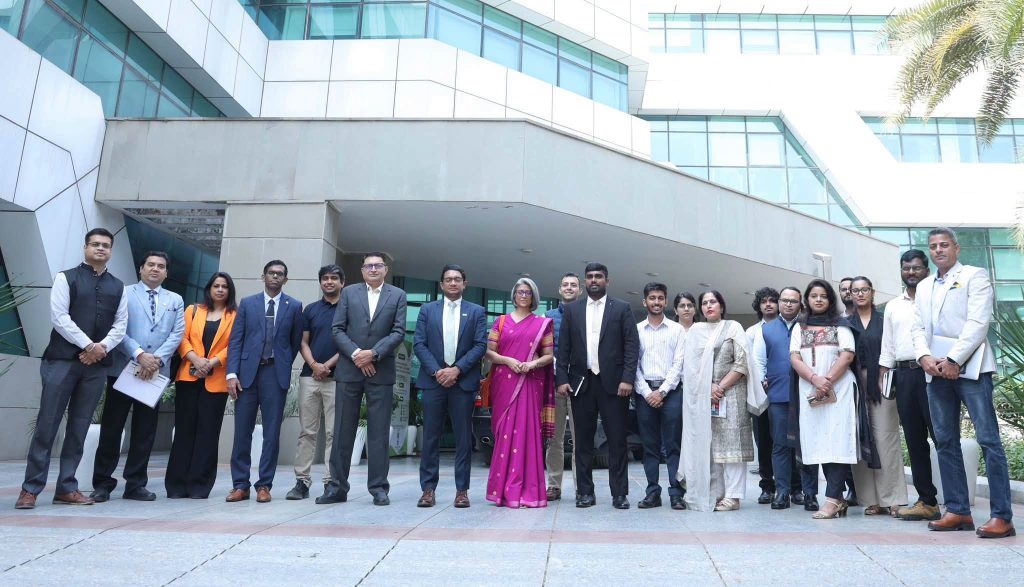
Sri Lanka’s transition from economic stabilisation to sustainable growth, opportunities for Indian investment and the potential to build stronger partnerships in industry, technology and entrepreneurship were the key themes of the visit of Hon. Chathuranga Abeysinghe, Deputy Minister of Industry and Entrepreneurship Development of Sri Lanka, to New Delhi from 22 to 23 October 2026.
The visit brought together high-profile international media engagement, discussions with Indian industry representatives, an exploration of innovation partnerships with the Indian Institute of Technology (IIT) Delhi, and outreach to the diplomatic community. The Deputy Minister also invited Indian businesses to participate in Sri Lanka Expo 2027, the country’s flagship international trade exhibition.
The highlight of the visit was the Deputy Minister’s participation in the NDTV World Summit 2026 on 22 October, where he joined a fireside conversation titled “Sri Lanka’s Economic Reset: Recovery, Resilience and the Road Ahead.” Held under the theme “A World Between Orders,” the Summit brought together political leaders, policymakers, diplomats, business leaders and other prominent international voices.
During the discussion, the Deputy Minister expressed Sri Lanka’s deep appreciation to the Government and people of India for their support during the economic crisis of 2022. Reflecting on the lessons of the crisis, he outlined the progress made in restoring financial stability, restructuring debt and implementing structural reforms. He emphasised that, while Sri Lanka had emerged from the crisis and achieved greater stability, the next challenge was to translate these gains into sustained economic growth.
The Deputy Minister also highlighted the importance of greater integration with global markets. Drawing on India’s experience of gradually opening its economy and strengthening its international economic connections, he pointed to Sri Lanka’s ongoing trade reforms, including the removal of para-tariffs, as part of efforts to improve competitiveness and facilitate further free-trade agreements.
Sri Lanka’s ambition, he explained, extended beyond economic recovery. The country was seeking to position itself as a regional hub for trade, industry, technology, research and development, logistics, value addition and skilled talent. He invited international investors to participate in this transformation, delivering a clear message: “Don’t just support Sri Lanka’s recovery, be part of its growth.”
The Deputy Minister identified manufacturing, agricultural value addition, logistics, renewable energy, marine industries and technology as sectors offering significant potential for collaboration between Sri Lanka and India. He also outlined plans to establish new industrial zones through the Ministry of Industry and Entrepreneurship Development and through the Board of Investment of Sri Lanka to expand industrial capacity and create opportunities for both domestic and international investors.
Emphasising the importance of a more conducive business environment, he highlighted efforts to simplify investment procedures, digitise public services and strengthen regulatory clarity.
Engagement with Indian business leaders representing the Confederation of Indian Industry (CII), the Chamber for Industrial Trade and Economic Cooperation (CITEC), the National Association of Software and Service Companies (NASSCOM) and the Federation for Global Economic and Cultural Relations (FGECR) formed another important dimension of the visit. The meeting on 23 October provided an opportunity to explore how the longstanding relationship between Sri Lanka and India could be translated into stronger industrial, investment and commercial partnerships. Discussions focused on opportunities for Indian businesses to invest in Sri Lanka, collaborate with Sri Lankan enterprises, introduce technology and expertise, and develop stronger links with regional and international markets. Particular attention was given to sectors where the complementary strengths of the two economies could create mutual benefits, including manufacturing, information technology, renewable energy, logistics and value-added production.
The Deputy Minister also visited the Indian Institute of Technology (IIT) Delhi on 23 October to explore opportunities for collaboration between India’s innovation ecosystem and Sri Lanka’s emerging startup sector. Discussions focused on India’s experience in developing startup incubation programmes, the institutional and legal frameworks supporting early-stage enterprises, and partnerships connecting universities, researchers, entrepreneurs, investors and the private sector; and exploring potential institutional partnerships, knowledge sharing and opportunities to connect Sri Lankan entrepreneurs with India’s innovation networks. The Deputy Minister also interacted with startups developing innovative solutions with the potential for global impact.
The Deputy Minister’s engagements with leading Indian media organisations, including NDTV, WION and Times Now, provided further opportunities to communicate Sri Lanka’s economic priorities and its interest in deepening economic cooperation with India. These engagements reinforced Sri Lanka’s message that the country is seeking not only to consolidate its recovery but also to attract investment, expand industrial capacity and build mutually beneficial partnerships with Indian businesses.
The Deputy Minister also met with several Ambassadors of countries with diplomatic missions resident in New Delhi that are accredited to Sri Lanka and explained Sri Lanka’s economic priorities, industrial development agenda and investment prospects, while encouraging stronger commercial engagement and support for Sri Lanka’s development objectives.