Towards Zero Poverty: Why Effective Targeting of Samurdhi Transfers is Essential
By Lakshila Wanigasinghe
The first Sustainable Development Goal (SDG) is to “end poverty in all its forms everywhere” by 2030. While achieving the goal of zero poverty is a lofty goal for any government, it is profoundly more so for those of developing countries. The high levels of inequalities and resource constraints are the main factors that stand in the way of reaching this ambitious yet attainable aim.
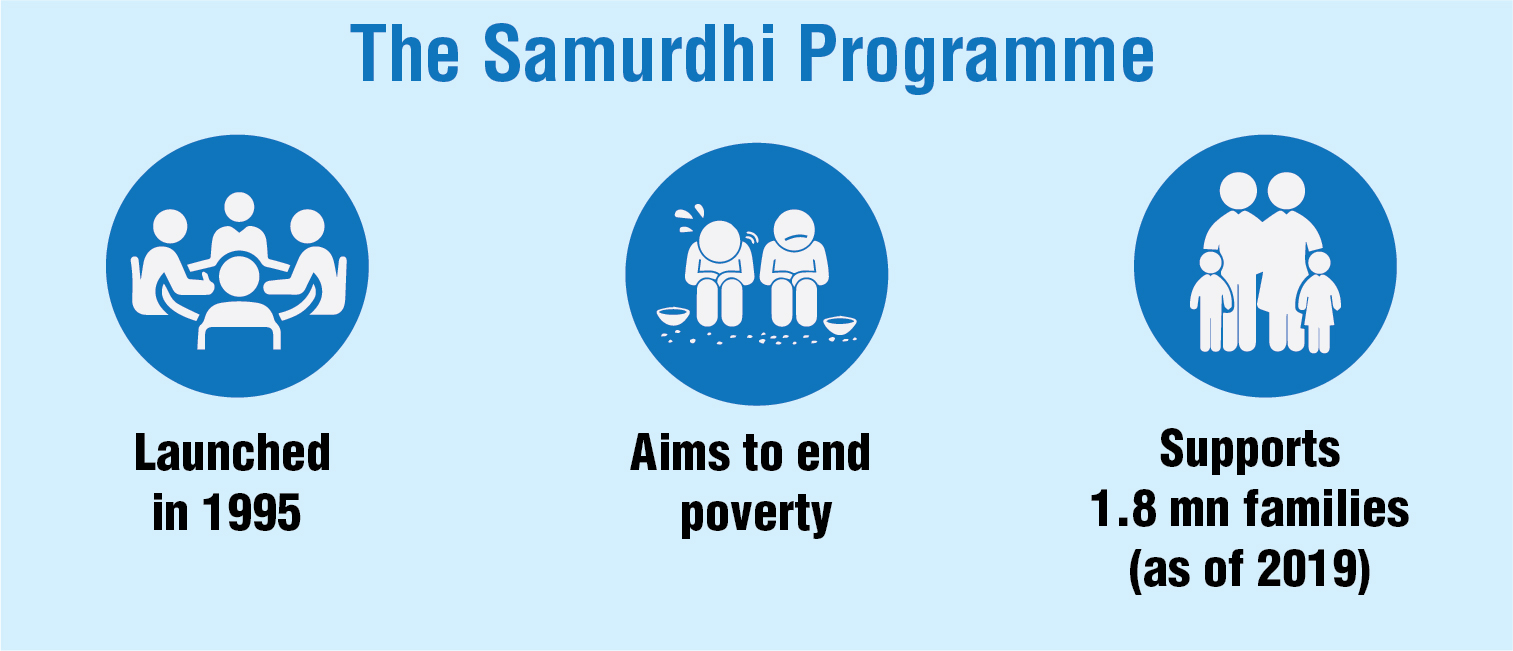
There are several steps Sri Lanka can take to fast-track the achievement of SDG 1, and extend greater social protection to its most vulnerable groups. This blog analyses the Samurdhi (prosperity) programme, the country’s main poverty alleviation initiative launched in 1995, and argues that addressing its core problem of poor targeting of beneficiaries is essential to end poverty in Sri Lanka.
Where Do We Stand?
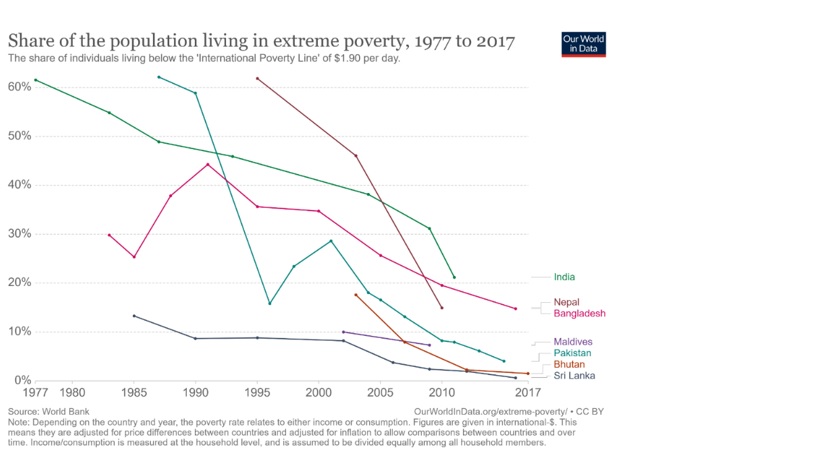
Sri Lanka has performed reasonably well in the area of poverty eradication in relation to its South Asian neighbours. As evident from the global progress towards achieving SDG 1 – Sri Lanka has reported a continually declining long-term poverty trend. The number of poor in the country has gradually declined with only 843,913 persons in poverty in 2016 in comparison to 1.3 million in 2012/13. The share of poor households has also declined from 5.3% in 2012/13 to 3.1% in 2016. The proportion of poor as measured by the poverty headcount index (PHCI) also shows a long-term downward trend with an over 70% drop during the decade between 2006 – 2016 (PHCI 2006/7 15.2% – PHCI 2016 4.1% ).
Poor Targeting
The
Samurdhi programme currently supports over 1.8 million beneficiaries but ineffective targeting
has been a major issue plaguing the programme for several years. As a poverty
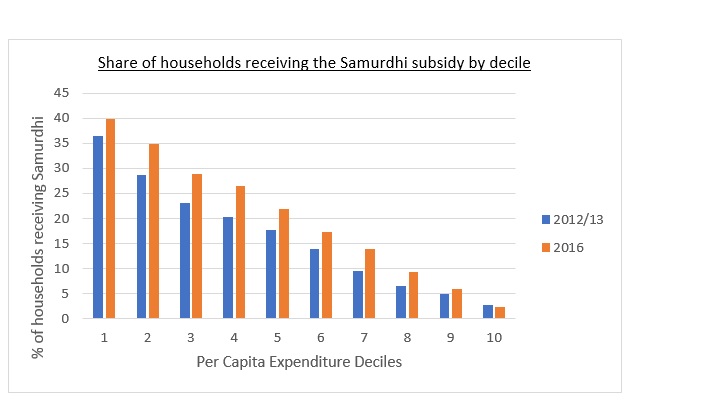
alleviation strategy, its main target should be low-income groups but analysis
of Samurdhi recipient households shows that the programme supports not only
low-income categories but families with high income too. As of 2019,
approximately 33% of Sri Lankan households were
recipients of Samurdhi benefits, and this represents a proportion
that is much higher than the current poverty levels. Data show that targeting
has worsened over time with a lesser proportion of poor households benefiting
each year. The programme, thus, suffers from both inclusion – including
ineligible groups – and exclusion – excluding eligible groups – errors.