Youth Migration: Challenges and Opportunities for Sri Lanka
By Thisuri Ekanayake
A great deal of discussion is underway on what appears to
be the latest wave of migration from Sri Lanka. These conversations focus on the desire of young
people to migrate in search of greener pastures in the face of the soaring cost
of living and uncertainty about the country’s future. While the exact scale and
nature of youth migration remain unclear, the costs of brain drain dominate these discussions. The
brain drain concern is valid, yet focusing on it alone can limit our
understanding of the complex implications of migration. This blog argues that
apart from its challenges, youth migration can also present some surprising
opportunities for socio-economic development if strategically managed.
Youth Migrants
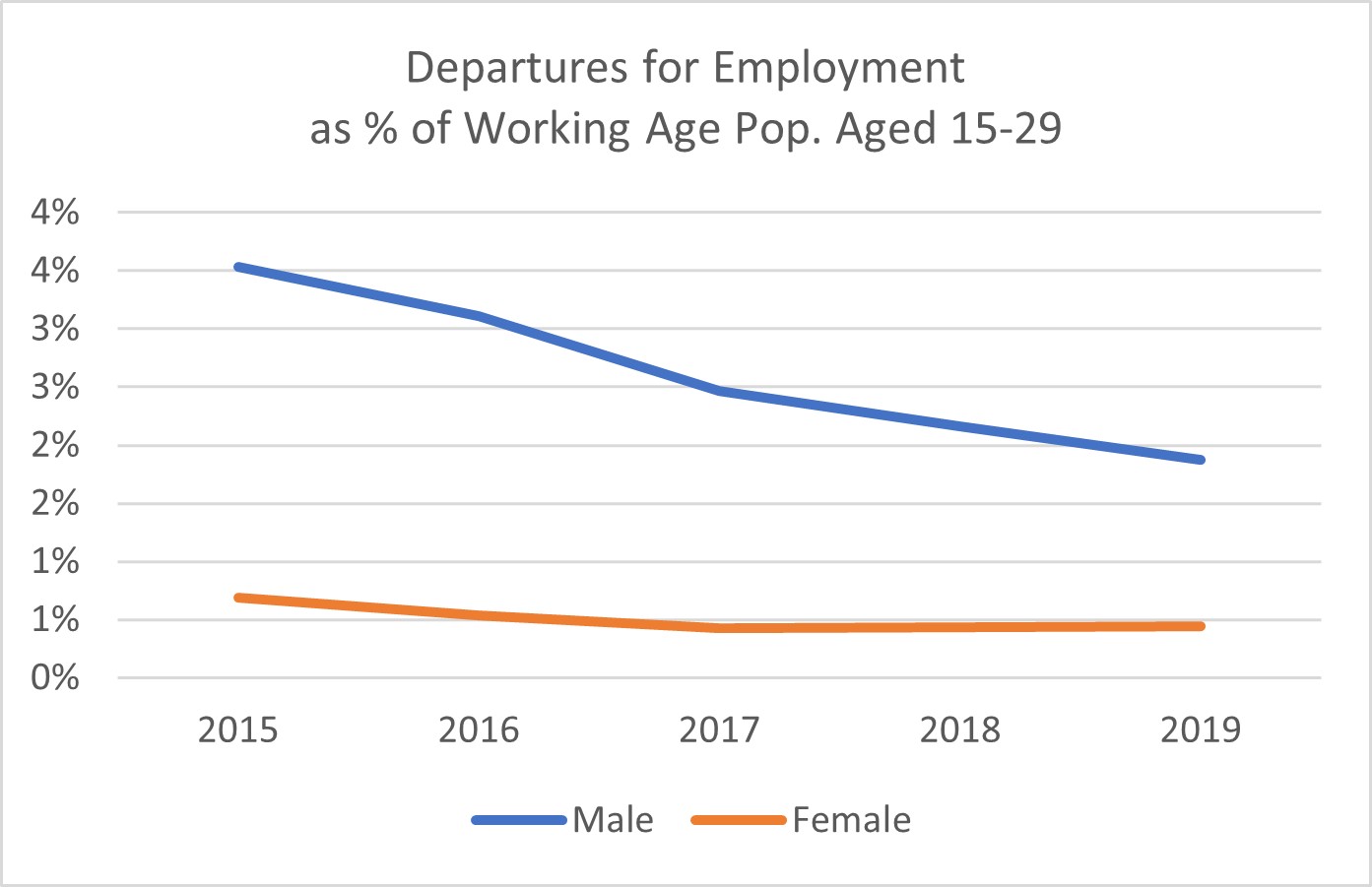
According to the latest Social and Economic Statistics and the Labour Force Surveys of Sri Lanka, departures for
foreign employment among young people aged 15-29 years in relation to their
population has not seen a noticeable rise in the recent past.
While it can be argued that the perceived increase
in migration is a more recent phenomenon accentuated by the pandemic in 2020,
it is also possible that young people depart more frequently for other pursuits
such as education, for which statistics are not publicly available. To further
complicate matters, it is unclear whether most youth consider education as a
pathway for long-term residence abroad or intend to return to Sri Lanka with
their acquired qualifications.
An Opinion Tracker Survey carried out by the
Institute of Health Policy provides a clearer answer. This survey suggested that youth aged
18-29 have the highest desire to migrate at around 48%. But it was people in
areas such as the Western province who indicated greater capability of
preparing for migration. This is likely due to the high initial cost including
airfare, tuition fees, and initial living expenses. Departures in categories
other than short-term employment, therefore, seem to be mainly associated with
high and middle-income groups. One frequently discussed implication of this is
brain drain or the emigration of highly knowledgeable people. Out-migration can
also affect economic growth as these social segments provide a stable source of demand for goods and
services
and contribute to investments. Beyond economic impacts, such communities also
hold significant socio-political power in the country. Although understanding
the full extent of the desire of young people to migrate remains difficult due
to the lack of comprehensive data, a more strategic approach is still warranted
to mitigate the adverse effects of migration and leverage its unique
advantages.
Youth Migration and Development
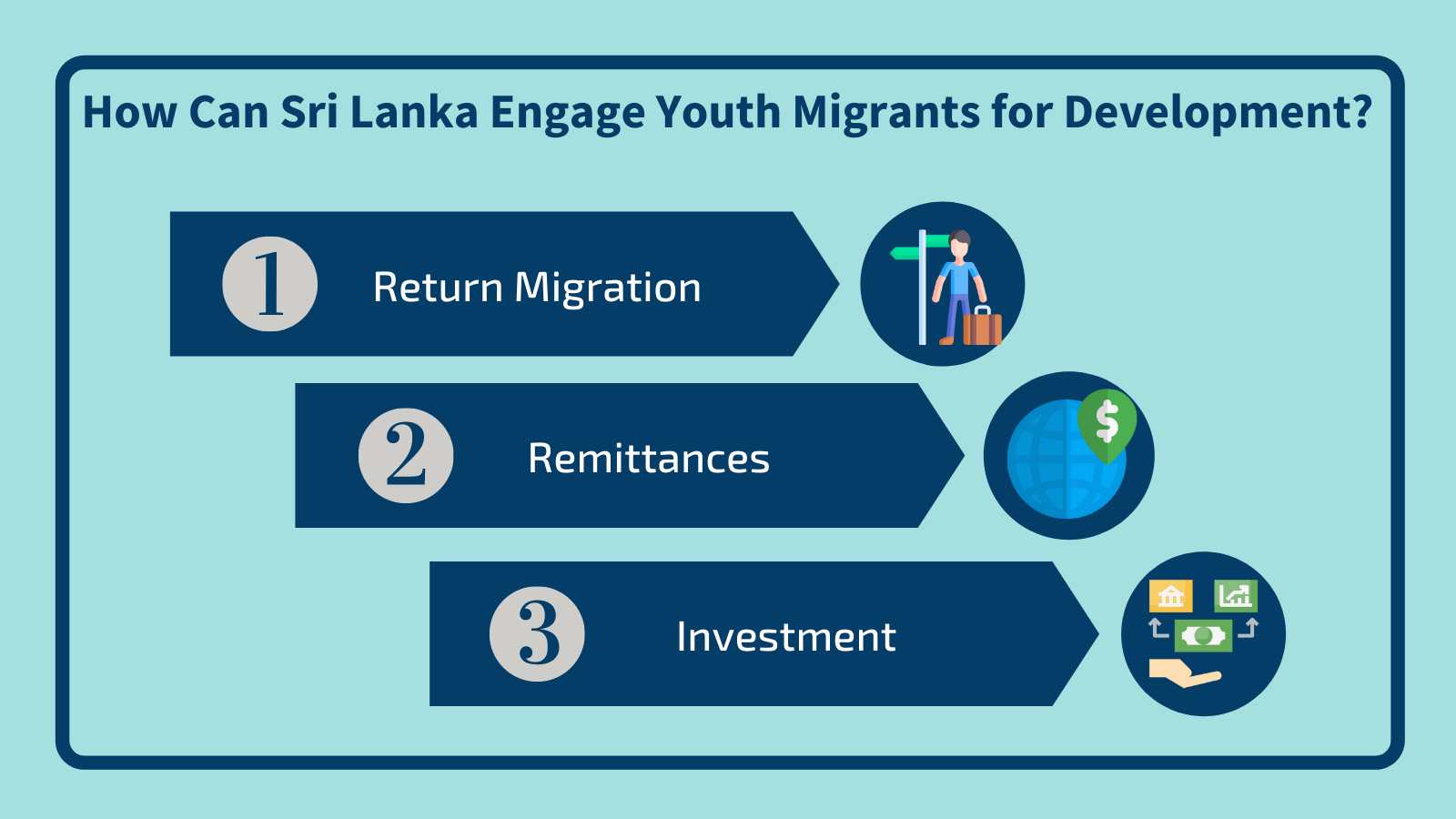
Return Migration
As human capital is one of the most
valuable resources in Sri
Lanka, brain drain can be detrimental.
Conversely, return-migration of those who have acquired greater knowledge and
skills would increase the stock of human capital. However, the challenges of
absorbing returning youth must also be acknowledged, since there can be a
mismatch in acquired skills, expectations, and the existing labour market
demand. Aside from this, a high unemployment rate (26.5%) among those aged 15-24 years is
already prevalent in the country. As such, it is necessary to create more
opportunities for youth especially in areas such as science and technology
which have a potential for growth and innovation, and also facilitate a
conducive business environment and financial system so that knowledge and
skills can be utilised in a productive, profitable manner.
Remittances
Migration and remittances have been widely discussed in relation to the
current foreign exchange shortage in the country. Although there is some
difficulty in estimating the remittances by the youth alone due to data
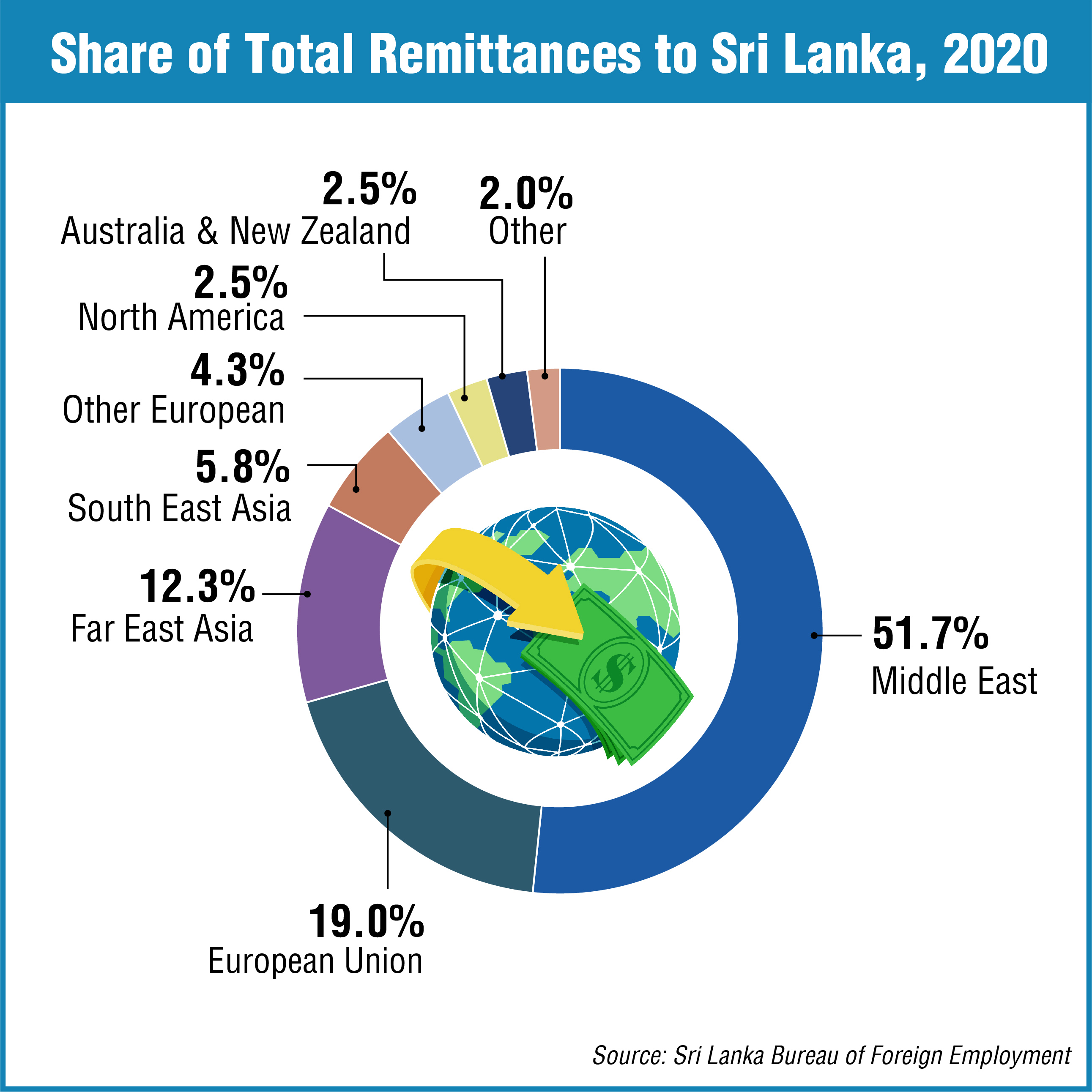
availability, the Sri Lanka Foreign Employment Bureau finds that in 2020, the overall highest
contributions originated from areas such as the Middle East (51.7%) and the
European Union (19%) whereas destinations such as North America or Australia
and New Zealand only account for 2.5% of the total remittances each. This can
be expected as many who depart to the former regions are temporary workers
regularly remitting to support their families and livelihoods in Sri Lanka.
There is some potential then, to improve
flows from the latter regions with sizable communities of Sri Lankans or those
of Sri Lankan origin. Proactive engagement of young people can be carried out
especially through networks such as school or university alumni associations,
voluntary groups, and educational institutions in collaboration with government
and non-government bodies.
Investment
As a somewhat risk-averse society,
investment and entrepreneurship in Sri Lanka tend to suffer,
especially among the youth. But this is understandable given the volatile
economic conditions, relatively poor business environment (99th position in the Ease of
Doing Business Index in 2020), limited capital, and negative societal
attitudes. Conversely, youth from diaspora communities, once securely
established are likely to have greater access to capital and may also be less
risk-averse due to their exposure to new norms and attitudes.
Another benefit of connecting with
expatriate communities is that they tend to be mutually interested in
maintaining ties with their country of origin due to various reasons including
economic opportunities, a desire to support family and friends and even to
contribute towards national development. Identifying and communicating
opportunities, as well as facilitating ventures through simpler processes and
incentives are some measures that can be taken to achieve this win-win outcome.
In short, while some young people have recently shown a greater desire to migrate, this scenario presents both challenges as well as opportunities. Young migrants residing abroad maintain a significant potential to contribute to Sri Lanka’s development if they are proactively engaged. However, such initiatives should be carried out with caution since false commitments and major inconveniences can dishearten and discourage migrant communities from further attempts at maintaining ties with their motherland.
Thisuri is a Research Assistant working on migration and urbanisation policy research at IPS. She holds a BA (Honours) in Economics from the University of Colombo. Thisuri participated in the 2020 IMF Fund Challenge and was selected to present a paper at the FISU World Conference on Innovation, Education and Sport in Lucerne, Switzerland. As an undergraduate, Thisuri received a scholarship for obtaining the best results in the first-year examination of the Faculty of Arts. (Talk with Thisuri: thisuri@ips.lk)