
Fishing For Sustainable Profits in the Northern Province
By Jekhan Aruliah
I have so often heard from well meaning cash rich Diaspora
that they can’t find sensible investment opportunities in the North. As the Good Book says, “seek and ye
shall find”. For example, look at the
Northern fisheries industry.
It may surprise you to hear that the Northern Province has about 40%* of Sri Lanka’s coastline. Surprising because looking at a map of the whole country, the Northern Province seems to be a much smaller sector of Sri Lanka. However, on closer examination it has the most convoluted coastline which includes many islands, spits and lagoons. All the watery peripheries of these islands, spits of land, lagoons, and the various other ins and outs add up. If you pedalled your tricycle along the saltwater coasts of every bit of Sri Lanka you would spend 40% of the trip in the Northern Province. (*40% is the figure used by the Asian Development Bank in the report I refer to later in this article).
With this lengthy coastline The Northern Province is blessed
with major opportunities for fisheries, aquaculture, and tourism. All four
districts in the Northern Province have significant coastal access. Without
intending to overlook the great potential for coastal tourism, this article
will focus on the potential for the fisheries and seafood industry. A potential
that offers opportunities to small fisher communities all the way to large
businesses.
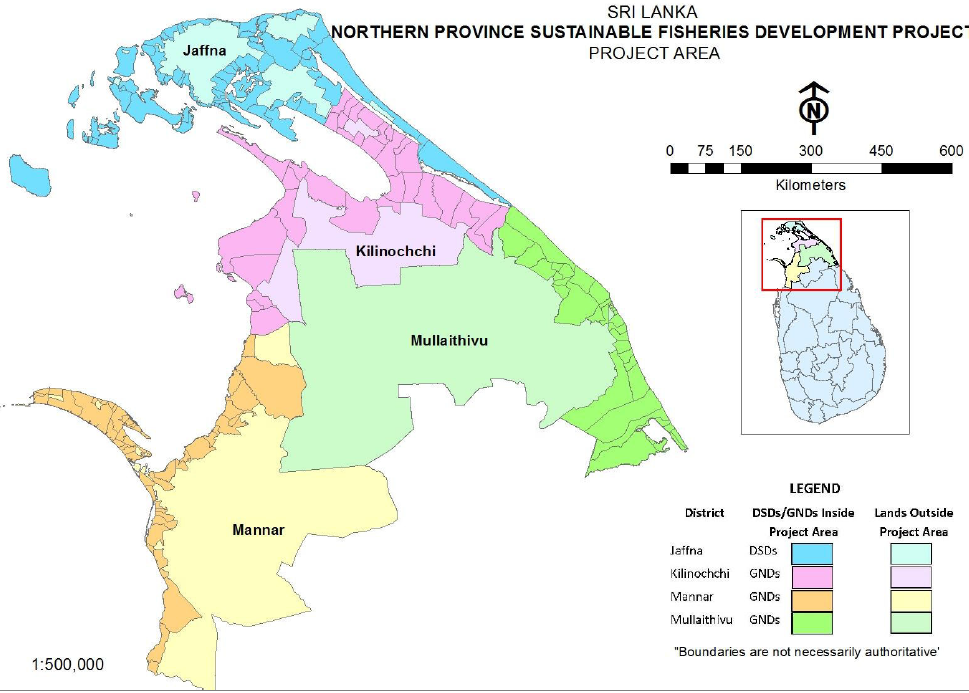
The map above of the Northern Province is from an ADB (Asian Development Bank) report on sustainable fisheries development in Sri Lanka. It shows those Grama Niladhari Divisions (GNDs, these are similar to villages for administrative purposes) which have a significant fishing community. This map indicates how the fishing industry can bring prosperity to a very significant proportion of the Northern community.
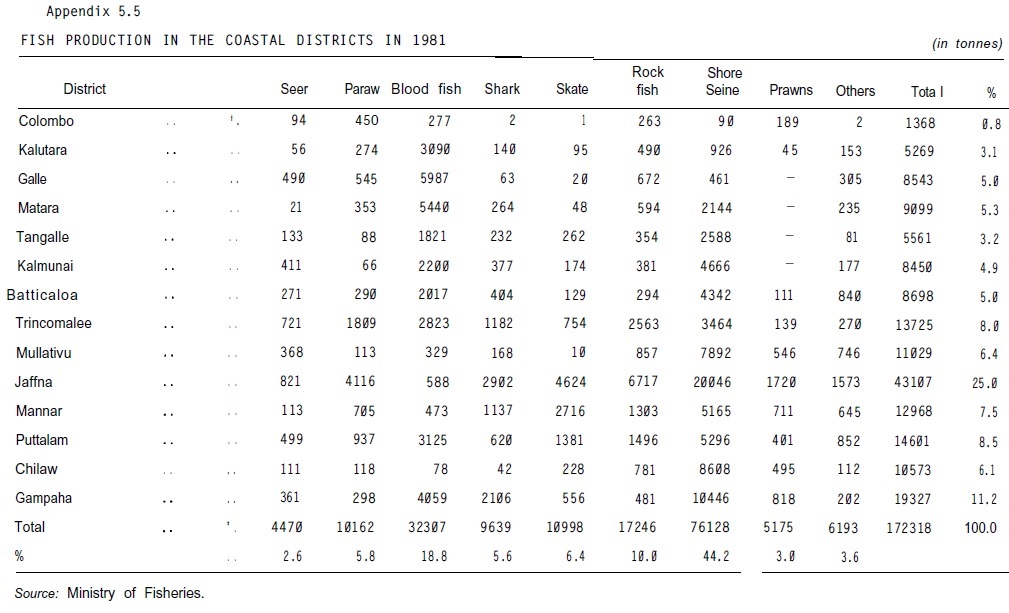
This ADB report states “In 1983, prior to escalation of the conflict, the Northern Province, which has 40% of the nation’s coastal belt, accounted for 40% of its marine fish catch”. Data from the Ministry of Fisheries for 1981 which I found in a report by the United Nations’ Food and Agriculture Organisation (FAO) shows that in that year Jaffna District (until 1984 Killinochchi was part of Jaffna District) contributed 25% of Sri Lanka’s coastal fish production, with Mullaitivu and Mannar contributing a further 13.9%.
The Sri Lankan Civil War had a terrible impact on Northern fishing from which it has still not made much progress recovering. In 2017, according to figures by the Sri Lanka Central Bank, marine fisheries in the Northern Province in 2017 were only 19% by tonnage and 15% by rupee value of Sri Lanka’s total fisheries catch. Still less than half its pre-war 40% share. There is evidently huge scope for the North to at least recover its share more than doubling it back to the pre-war 40%.
Innovative
Fisheries Developments
Pilot projects have already been done proving the enormous potential for new and novel investment in Northern fisheries. According to the National Aquaculture Development Authority (NAQDA) report for 2018
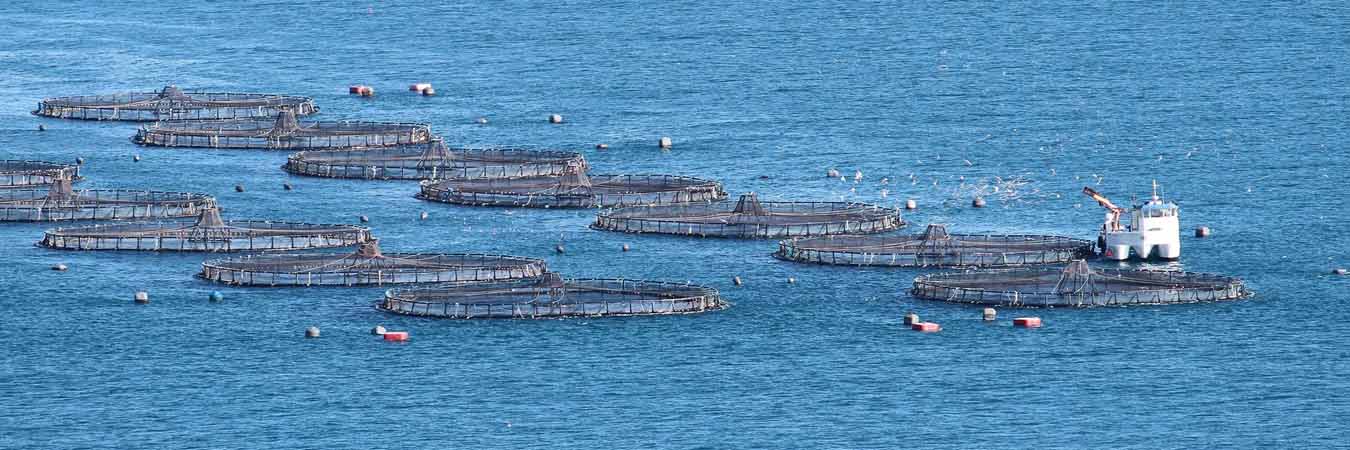
Sea Bass farming is done in offshore cages in Trincomalee run by Oceanpick, a company founded in Sri Lanka in 2012. In 2019 this remains the only such offshore cage farm. In the seven years between 2012 and 2019 no other companies have brought into production similar installations in Sri Lanka. In 2019 Oceanpick received Best Aquaculture Practice Certification from the Global Aquaculture Alliance, showing that this Sri Lankan business can compete at international standards.
While Trincomalee has the benefit of deep waters suitable
for large cages, there are areas in the Palk Strait from Mannar to Jaffna that
are suitable for small cage farming. The NORAD report states:
“the potential area
resources for marine fish farming are the areas of 8-12m depth, especially in
Palk Strait from Mannar up to Jaffna, but they are only suitable for
small-volume cage farming. Therefore, it is recommended that NAQDA makes a
small-volume cage farm zone (a model aqua park) in e.g. the Delft Channel,
which has some 60 km2 potential suitable area”. The report goes
on to say “The farmers could be fishers,
who only operate one raft or company/cooperative structures having several
rafts”.