
From cane field to finished product: The value chain powering Gal Oya
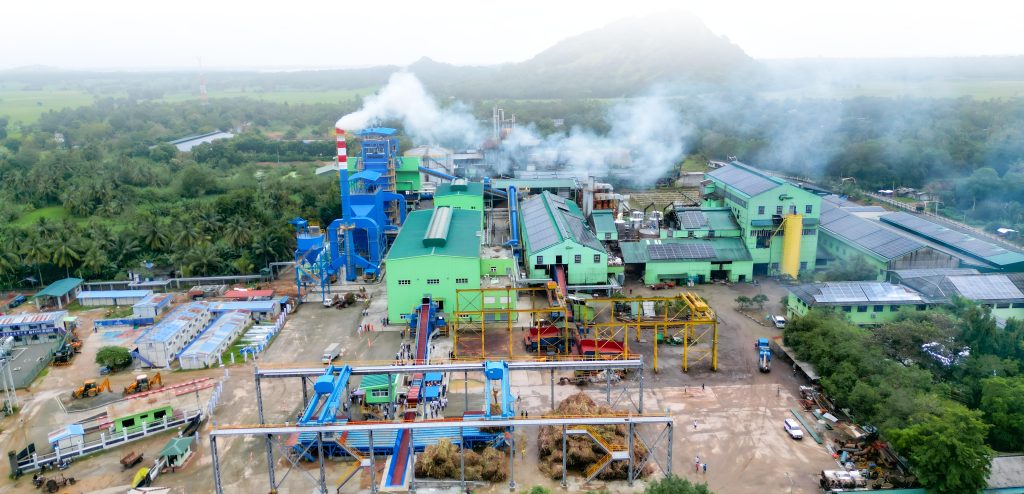
In the fields around Ampara, sugarcane begins as a rural crop. By the time it has moved through the
Gal Oya Plantations complex, however, it has become far more than sugar. The cane juice is processed for the domestic market. The fibre helps generate steam and electricity. Molasses is converted into Extra Neutral Alcohol. Fermentation creates carbon dioxide and biogas. Filter mud and other organic residues are returned to the soil as compost. Water is treated for reuse.
What appears at first to be a conventional sugar factory is, in practice, an interconnected value chain in
which agriculture, manufacturing, energy and environmental management reinforce one another.
This integrated model is the real story of Gal Oya Plantations. Its importance is not measured only by
the quantity of sugar produced, but by how much value is retained within the Eastern Province
before, during and after every crushing season.
The story begins with the landscape itself. The Gal Oya Valley was one of Sri Lanka’s earliest post-
independence development undertakings, created around irrigation, settlement and agricultural
production. Sugarcane cultivation commenced in the Ampara area in the 1950s, followed by sugar
production in 1960 and distillery operations in the early 1960s. The factory later passed through
several institutional changes before closing in the late 1990s, leaving farmers without the dependable
market around which the regional cane economy had been built.
Its revival under Gal Oya Plantations restored more than a factory. It re-established the connection
between the field, the farmer, transporters, harvesters, technicians, factory workers and downstream
industries. The operation was structured as a public-private partnership, with the Government of Sri
Lanka retaining a majority stake and private-sector partners undertaking the management and
redevelopment of the enterprise.
Today, the first link in the chain remains the farmer. Gal Oya Plantations supports cane growers with
planting material, agricultural inputs, training, extension services and a buy-back market for the
harvested crop. This relationship is crucial because sugarcane is not a crop that can be sustained by
cultivation alone. Farmers need access to suitable varieties, field advice, fertiliser, harvesting
arrangements and timely transport to the mill. The factory therefore functions as the commercial
centre of a much broader agricultural system.
The scale of that system has expanded considerably. The Ministry of Industry and Entrepreneurship
Development’s 2025 progress report recorded 11,613 farmers and 11,005 hectares under cultivation,
with 348,847 metric tonnes of cane supplied for crushing between January and September 2025. The
same report placed direct employment at approximately 1,250 and estimated that the wider operation
supports tens of thousands of indirect livelihood opportunities. Every tonne of cane entering the
factory carries value generated by growers, field workers, machinery operators, transport providers
and rural service businesses.