
Healthy minds, safe workplaces: A shared responsibility for Sri Lanka’s future of work
By Joni Simpson and Dr Rajesh Sambhajirao Pandav
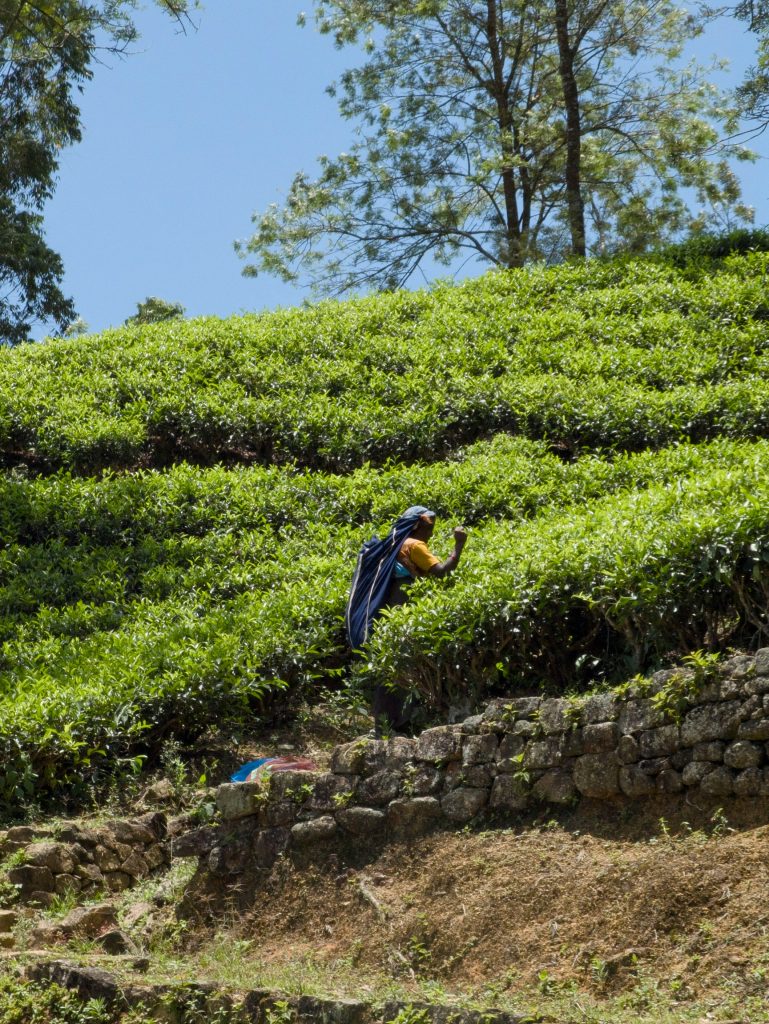
She wakes before the mist clears. By the time most of Colombo is having breakfast, she has already
been working for two hours, plucking, carrying, meeting a daily quota that does not change
regardless of her rest, discomfort or nourishment. She works on a tea plantation and is among many
others whose contributions are vital to the economy, yet whose experiences are not always reflected
in any occupational health statistic. The pressure to meet quotas is often matched by anxiety over
household finances, rising costs and caregiving responsibilities that leave little space for rest or
recovery. The stress she carries home every evening has no official category. But it is real, and it can
and does do harm.
This 28 April, World Day for Safety and Health at Work asks us to look more closely at something
we have long struggled to fully recognize, that the way work is designed, organised and managed,
the pressures it imposes, and the control it limits can affect health and wellbeing. Not only
physically, but mentally and in ways that are often difficult to measure yet deeply felt.
The World Health Organization emphasizes that psychosocial risks such as excessive workload,
long or inflexible working hours, job insecurity, discrimination, harassment and bullying are serious
occupational hazards, as equally important to physical, chemical or biological risks.
A new International Labour Organization report released this week brings global attention to this
reality. It estimates that across the world more than 840,000 workers die each year from health
conditions linked to psychosocial risk factors at work, including cardiovascular disease and mental
health conditions. These figures point to a growing challenge that affects workplaces globally,
including in Sri Lanka.
Psychosocial risks shaped by elements of work and interactions at work are not new nor limited to
Sri Lanka, but recent challenges have made them more visible and, in many cases, more acute. The
past few years have tested Sri Lanka’s resilience with economic pressures, rising costs, dismantled
livelihoods, and institutional strain.
Workers in plantations, garment factories, construction sites and health services have absorbed
much of that pressure. Women make up a large share of the plantation and apparel workforce, while
men predominate in sectors such as construction and transport. At the same time, a significant
share of Sri Lanka’s workforce is engaged in informal or otherwise vulnerable forms of
employment, meaning psychosocial risks may be experienced differently across sectors and groups
of workers, often without adequate protections or support.
What the general evidence tells us, and this is important, is that psychosocial risks are not inevitable.
These are factors that can be improved through practical and sustained efforts. This aligns closely
with Sri Lanka’s current policy direction, where reducing excessive working hours and strengthening
occupational safety and health are emerging priorities within broader labour and health frameworks.
Addressing psychosocial risks comprehensively is central to advancing safe and healthy working
environments, a fundamental principle and right at work. It demands organizational and systemlevel action, not only individual coping strategies.
Sri Lanka is well placed to take this forward and already has a foundation to build on through its
National Occupational Safety and Health (OSH) policy and National Guidelines on Establishing
Bipartite OSH Committees at Workplaces, which recognize psychosocial hazards alongside physical
and ergonomic risks.
The workplace OSH committee guidelines encourage employers to look beyond traditional physical
hazards and pay greater attention to issues such as stress, harassment, workload and work
organization. However, gaps remain. Existing labour laws do not yet explicitly address psychosocial
hazards, and limitations in data, inspection tools and workforce capacity to assess and respond to
these risks consistently across workplace, persist.
A particular strength lies in Sri Lanka’s institutional framework. Occupational health services are
delivered through the Ministry of Health, while labour regulation and workplace conditions are
overseen by the Ministry of Labour. This provides a valuable opportunity to connect public health
systems with workplace-level prevention. Strengthening coordination between the two domains can
support a more integrated approach, one that brings together prevention, early identification, and
access to care.
This is where collaboration between the International Labour Organization and the World Health
Organization becomes especially important. WHO emphasizes that mental health protection needs
to be embedded in workplace systems and it is strongest when supported by fair work practices,
supportive leadership, safe workplace cultures, and access to care where needed. The ILO focuses
on working conditions, labour standards and OSH systems, emphasizing prevention through the
design and organization of work through social dialogue among government, employers’ and
workers’ organizations. Together, these perspectives reinforce a shared understanding: the
workplace is a critical entry point for protecting and promoting mental health.
Moving from recognition to action will be key.
Efforts can begin in sectors where pressures are particularly evident, including plantations,
construction, apparel and the health and care workforce itself. Within workplaces, improvements in
work organization such as reasonable working hours, flexible working arrangements, clear roles,
supportive leadership and effective communication can reduce stress and support both well-being
and performance. Creating safe channels, such as workplace forums in public sector, for workers to
raise concerns and participate in decisions that affect their work through social dialogue is equally
important.
Integrating mental health into existing occupational health structures is an important step.
Workplace joint OSH committees can play an important role by routinely examining workload,
working hours, harassment, work organization and supervisor support as part of regular workplace
improvement plans.
Stronger links between the Ministry of Labour OSH system and national mental health
services can further support early identification, referral pathways, stigma reduction and reasonable
accommodation for workers experiencing mental distress. Aligning with the National Mental Health
Policy, this approach will allow for leveraging existing public-sector mental health infrastructure
rather than build new or parallel services.
Strengthening data and awareness remains essential. Psychosocial risks are often underrecognized and under-reported in official statistics. Improving understanding while ensuring trust
and confidentiality can support more effective policies and workplace practices.
Addressing psychosocial risks is not only a technical issue. It is also about how we understand work
and its impact on people’s lives. The way work is organized shapes health outcomes, and the
responsibility for addressing risks cannot rest with workers alone. It is a shared responsibility across
institutions and social partners.
The woman on the estate at dawn may never read this. But those who influence her working
conditions, employers, supervisors, policymakers, will. The choices they make about how work is
organized, supported and regulated will determine whether work protects health or undermines it.
Work should not come at the cost of health or dignity. Ensuring safe, healthy and decent work for
all is a shared responsibility and an essential investment in Sri Lanka’s future.
The opinion editorial is jointly authored by Joni Simpson, Country Director, International Labour Organization Country Office for Sri Lanka and the Maldives and Dr Rajesh Sambhajirao Pandav, World Health Organization, Country Representative, Sri Lanka.