
Tribute: Nissanka Welikala – Planter (1945-2026)
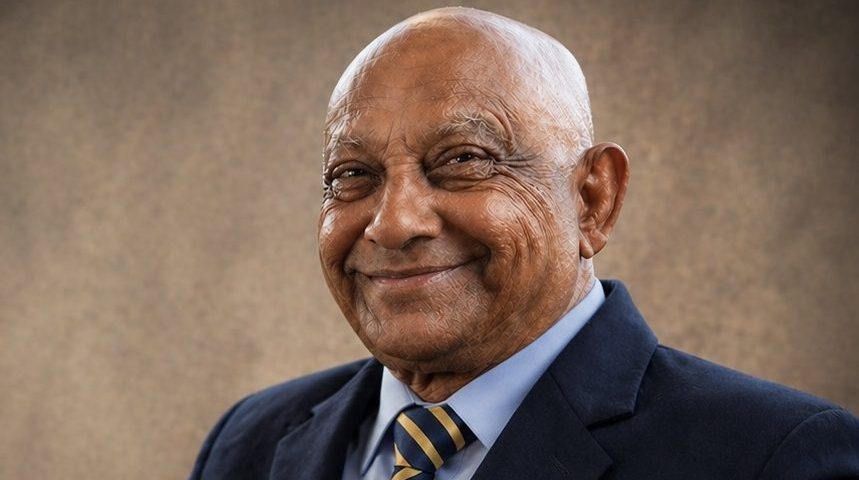
April 28, 2026 (LBO) – In Sri Lanka you come across all types of ‘characters’, and then there was my Uncle Nissanka, AKA Aswin, Alex and of course ‘Boora.’
Nissanka Welikala was the only son of Radiologist Dr. A. H. N. Welikala and Viola Welikala. Dr. Welikala dropped dead of a heart attack in his early forties, leaving Nissanka as the man of the house. He was under age 10 with 3 sisters and a widowed mother to watch over.
As the apple of his mother’s eye, in my time knowing him, he could do no wrong by her. He attended Royal College, played rugger, and somehow obtained the name ‘Boora’. I’ll leave it to his classmates to articulate the meaning of the nickname, but it was notable that in my experience around them, the nickname was ever present.
Like many of his contemporaries, he started a career as a Planter. The word ‘planter’ is a word that everyone in Sri Lanka knows, but is not a term well known to the outside world. A career as a Planter was rooted in the colonial history of Sri Lanka. The profession lorded over thousands of acres of agriculture, notably coffee, rubber, and later of course Ceylon Tea.
Thanks to Dilmah’s brilliant website www.historyofceylontea.com, I am able to trace my uncle’s planting career over an astounding 30 year period. Starting in 1963 as a creeper on Opata, 1964-66 as an Assistant Superintendent at Wellandura Group, 1967 at Laminiere, 1967-70 at Palmgarden, 1971-73 at Glenanore, 1974-75 at Great Western.
Later in 1975 he was Acting Superintendent at Alton and then almost 20 years as a Superintendent at Logie (1976-79), Beverley (1980), Rasagalla (1981-82), Clyde (1983-89), Sirikandura (1989-93) and Baddegama (1994).
As a young person I never realised that my Uncle Nissanka was such an expert in his profession, and what a complex and important profession it was. Planting was and still is a serious business in Sri Lanka. A senior planter could be in charge of thousands of acres and thousands of families. They are among the leading foreign exchange earners for the country and live in remote stunning locations, but oftentimes away from their families. My uncle’s two children, Asthika (also a ruggerite) and Sheyanthi were schooled at Royal and Ladies while residing with his mother Viola in Colombo.
During my uncle’s time, children of the westernised families in Colombo would populate the ranks of the planters. They took over from the British with their traditions of social clubs and a drink after work. My uncle Nissanka even used to regale about a dinner he had with the Duke of Edinburgh HRH Prince Phillip. I wish I could sit with him and explore that evening in greater detail. As I remember the story it was an evening full of hilarity along with spirits flowing.
Recently, I was with my family traversing a 17km hike on the Pekoe Trail from Kandapola to Udapusselllawa. We found ourselves in a moment of distress on the Gordon Estate. To make a long story short, the community came to our rescue, specifically the tea pluckers and the planters. During this experience I was in a sort of accounting room with a field supervisor observing his operations.
It was an impressive operational machine with various junior planters and other minor employees shuttling in and recording various information. It was interesting to note that it appeared to me that the planters now came from the provinces, with a moderate command of the English language but of course fluent in Sinhalese and Tamil. I was able to communicate to them that my uncle was a planter just passed away. With this connection established, ‘Dorai’, we all felt more comfortable with each other.
I was struck by the appearance of these planters. Dressed immaculately, clean cut, and supremely confident in their profession. The whole operation seemed to have a wonderful structure that you could tell had come down from decades if not centuries. It struck me then how professional these people were, down to the tea pluckers. They knew their job as well as anyone, and performed it with order and structure day in and day out. I thought then of my Uncle and his life as a planter, moving up the ranks with an infinite number of noteworthy experiences.
Nissanka Welikala at the age of 50 left the industry and later migrated to the United States, eventually becoming a citizen of his new country. His whole family was there, so I suppose there was justification for the move. However, I can’t help but wonder about him leaving such a rich set of experiences and skillsets to move to a foreign land. He still had a green thumb, and his home gardens in the states were always impressively grown and produce bearing. However, it was now a city life for him. Maybe he wanted something different from the isolation, or possibly he was a bit disillusioned with all that the planters had to go through during Sri Lanka’s volatile political upheavals.
As of late I have been watching the Netflix series Yellowstone. I can’t help but thinking that my Uncle should have bought a ranch and transitioned from Sri Lankan planter to American cowboy. He would have been great at it due to his 30 years of experience in the hinterlands of Sri Lanka growing rubber and tea. He was an expert in his field, and on passing, joins the ranks of the many esteemed planters who have gone before him. Planting is an industry with a rich tradition that brought us the greatest of characters, and my uncle was a memorable one.