198 million people using ad blockers across
the globe, and an estimate of $21.8 billion
has been lost in ad revenues in 2015 because of it. However, using written, audio, and
experiential content to drive marketing campaigns generating awareness,
interest, desire and eventually conversion is what will set your content apart
from the plethora of content already available.
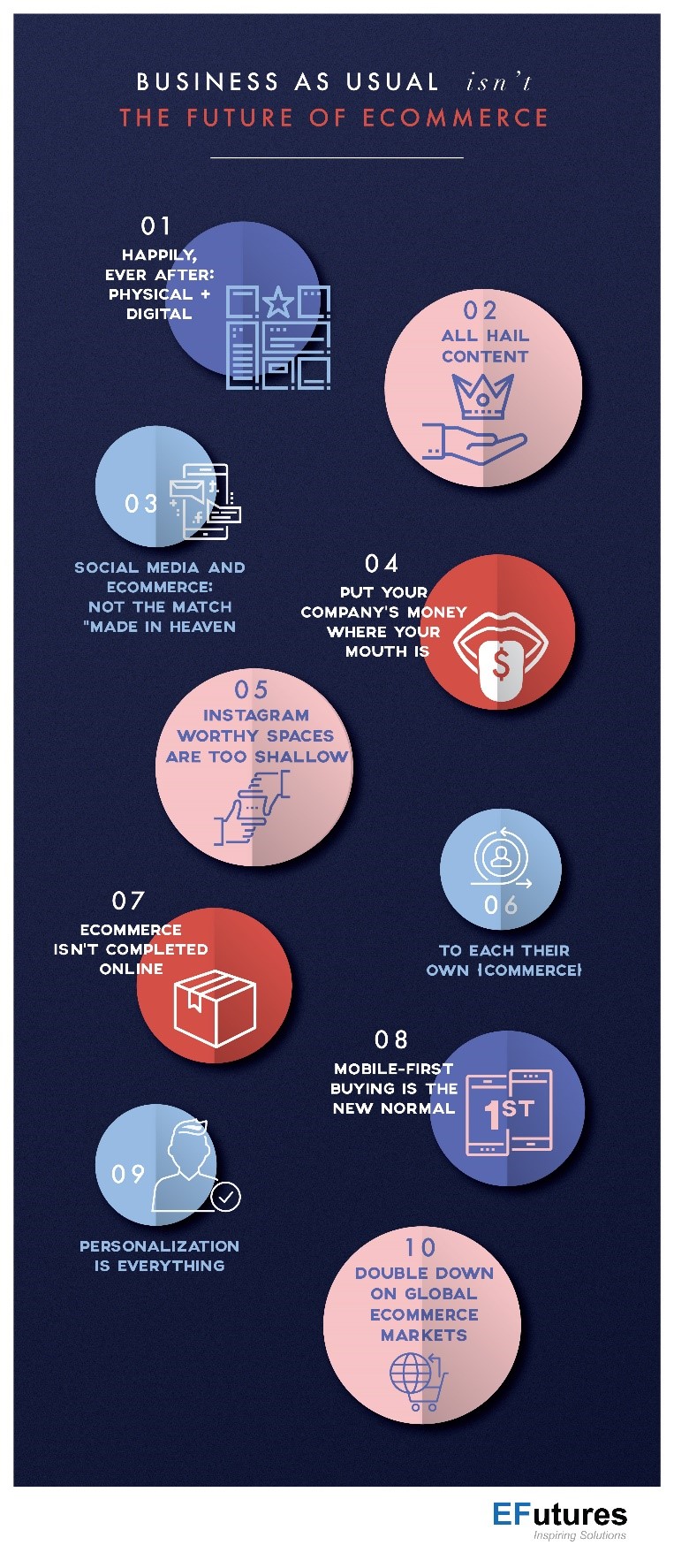
Social Media and ecommerce: not the match
made in heaven
For decades we’ve seen companies
going “native” by eliminating onsite sales and predominately selling within their
social networks. Whilst the benefits of social media lend its self well to
ecommerce (worldwide reach, the number of accounts and the increase in time
spent online) there seems to be an unwavering disconnect. Social media is
surprisingly not influencing people’s buying decisions the way it was projected
to.
Acquiring new customers is
most effective with low-cost engagement campaigns that originate with
entertainment or emotion, user-generated content, or with influencers. Story
telling is crucial for securing new customers. promotional marketing is ideal for
existing customers since they are more likely to engage with campaigns.
Retargeting needs to be sequential, personalized and cross-platform, varying
depending on each visitor’s last interaction. Finally, bring social online by
turning your social media content into shoppable galleries for your online
store.
Put your company’s money where your mouth is
Consumers have always
bought with their hearts and justified the spends with their heads. Digitally
native companies have latched onto this tactic by serving smaller niches where
they are able to better attend to their customers wants and needs than their legacy
competitors. To further explain this, we will turn to ThirdLove, a San
Francisco based online-only bra powerhouse. Last November, Victoria’s
Secret came under fire after Ed Razek, Chief Marketing Officer of Victoria
Secret made controversial comments about why he didn’t think the company’s
annual fashion show shouldn’t feature “transsexuals” because “the show is a
fantasy” during an interview with Vogue. Heidi
Zak, founder of ThirdLove, wrote an open letter to Victoria Secret on New York
Times calling out the appalling commentary and explained why Victoria Secret’s
male-fantasy marketing tactics, un-inclusive sizing and discriminatory culture
has in fact prompted brands, such as ThirdLove, to grow in the marketplace.
Writing the open letter
might have been a big risk on ThirdLove’s end, but it took a strong stance on a
very current and relevant issue and it didn’t go unnoticed with consumer.
Consumers are no longer making decisions based solely on products or prices,
instead they’re assessing what a brand is saying, what it is doing and what
they stand for. The letter was more than marketing, it connected the brand with
their consumers. Other examples of brands connecting with their consumers on
real issues include: Gillette’s “The best men can be” and Nike’s campaign with
Colin Kaepernick.
Instagram worthy spaces are too shallow
In an attempt to know their
consumers and understand how they want to shop, pop-up store with staged
Instagram-worthy spaces have taken over our social feeds, but it’s looking like
it has run its trend course rather quickly. Alternatively, think about spaces
that connect with the consumers and offers a functional space that is in line
with brand values. Yeti, the leading premium cooler
and drinkware brand, for
example, was able to bring the many facets and dimensions of its brand to life
with their flagship store. They took their retail environment and elevated it
to an experience center positioned around outdoor living. To bring the elements of the outdoors into the store, YETI
implemented Mood Media’s ScentAir System so consumers are surrounded by the
scent of campfire whilst shopping, they have hosted live music shows on the
instore stage, including SXSW musical showcase, and installed a bar to elevate
the experience of their customers further.
Physical stores are also a
great way to gain valuable insights and feedback from consumers day in and day
out; helping brands grow with and for their clients.
To each their own {commerce}
If you look online it’s almost
impossible to get away from digitally native brands such as: Warby Parker,
Allbirds, Hims, Casper and Leesa. The worlds of technology and commerce are
more intertwined today than ever before. Even though these products provide
different services and products, what they do have in common is their unwavering
focus on “brand equity” and “brand purpose”. All these brands focus on the value of the
brand; centered around the people and the product over the price and the
location. The notion of “selling something worth buying” is being altered by
DTC brands. For example, many DTS brands didn’t offer holiday discounts for the
sake of holiday discount, instead they cut through the clutter by hosting
discounts that were delivered and seamlessly built into the onsite and
check-out experiences in ways that were in line with brand values. Fashion Nova
for example, fasted-growing fashion brand in history, started the holidays with
the biggest online flash sale in history. During
the busiest retail week of the year, Thirdlove, a company that firmly believes
every woman deserves to feel comfortable and confident, redefined the meaning
of BOGO and offered a different kind of Black Friday deal. Every time a
customer purchased a bra, they gave one bra to a victim of the California
wildfires.
ecommerce isn’t completed online
The customer journey is not
as straightforward as it used to be, it might start on Pinterest and end at a
physical store front or via an Instagram buy button imbedded in an onside feed.
Customers could be ignited to purchase by an article through paid content,
organic search results, or simple through organic search results.
All the various channels
present a different set of obstacles for brands to overcome. We often see
businesses scrambling to adopt a multi-channel or an omni channel solution.
Multichannel marketing refers to the ability to interact with potential
customers on different platforms and the consumer gets to decide how they want
to engage with the brand. Omni channel marketing provides the consumers with an
integrated shopping experience. They can be shopping online from a desktop,
mobile phone, or at a brick-and-mortar store, but their experience will be
seamless.
In an attempt to be
everywhere to everyone, businesses often end up being nowhere for anybody. It
is critical brands let go of the expectation that consumers want everything in
one seamless experience. Instead focus on the importance of having the backend
part of the business functional. Before you unite channels, ensure your
inventory is maintained well and there is a system to how the orders are managed.
Customers who don’t get what they ordered when they were told they would can be
very unforgiving. Always keep in mind that ecommerce isn’t completed online, it
is complete when brands deliver.
Mobile-first buying is the new normal
Exponential growth in
mobile users, ever in markets such as Sri Lanka, means mobile traffic is
surpassing desktop. However, mobile sale conversion rates are still not
reflecting these changes, and in fact are less than half those of desktop.
Thus, mobile-first buying with convenience and easy access has to be thought
through all the way from the early design stages. Long gone are the days when
we can simply adapt a webpage for mobile based purchasing. Few recommendations for
mobile-first designs include: personalizing mobile experience with page curl
notifications instead of pop-ups for product recommendations, bypassing
traditional checkouts by providing mobile-first payments options within product
pages, and having scroller bars at the top of screen indicating spending
thresholds and tiered discounts (spend $50, save $10; spend $199 save $40)
We are seeing more and more
brands launching Progressive Web Apps (PWA) to keep up with mobile-first
buying. PWAs provide an installable, app-like experience (saved user data,
instant loading, push notifications) on desktop and mobile that are built and
delivered directly through the web. PWAs are a great way to tackle mobile-first
buying experiences.
Personalization is everything
As the
marketing tactics you employ become more and more sophisticated, so do your
customers. One-size fits all advertising messages are not as effective as it
was once thought to be, making way for micro moments. Such moments fall into
two school of thoughts- pattern interruption and effortless experiences.
Pattern
interruption is especially evident in the success of dynamically-generated
unique coupon as appose to generic coupon because unique coupon code signals to
the consumers that the experience is personalized, thus creating a level of
urgency. The formatting of a coupon code may seem like a tiny mundane detail,
but it’s a big signal to a sophisticated shopper.
Effortless
experiences are the opposite of pattern interruption and counts on impulse buying.
Effortless experiences keep track of your last orders and interactions and
suggests new purchases to enhance your experience. They aren’t generic
post-purchase offers, but rather timely messages and email notifications
leading customers to your store or online site.
Double down on global
ecommerce markets
Ecommerce is no longer a
thing of the West, we have already seen strategic shifts towards marketing for
the Asia Pacific region. Brands such as Rothy’s
Everlane and Allbirds have identified the importance of penetrating the Chinese
market. Keep in mind that when marketing in different global markets, you have
to do it the local way, the way you marketed in the U.S. might not work in
Chinese markets. It is not the time to shy away from global opportunities,
instead find innovative workarounds and local partners to help tap into global
markets.
The future of ecommerce will manifest itself in meaningful brand stories centered around people and relationships. As marketing tactics become sophisticated, so do customers. Consumers are no longer making decisions based solely on products or prices, instead brands are becoming an extension of who they are, thus they’re assessing what a brand is saying, what it is doing and what they stand for. Are you ready to foster direct and meaningful connections with your customers, today?