

Kenilworth Estate: Crafting premium Ceylon tea through innovation and heritage
Since 1947, when its current factory rose from the site of an earlier 1942 structure, Kenilworth Tea Estate has crafted teas renowned for their long, wiry, well-twisted leaves; blacker, cleaner, and meticulously rolled through an extended 2.5-hour Orthodox process that yields a coppery-bright infusion with creamy, full-bodied strength, woody frankness, and subtle citrus notes. Perched in Sri Lanka’s Central Province near Ginigathena, this medium-grown powerhouse under Hatton Plantations PLC produces 14 grades of premium leafy and semi-leafy black tea from high-yielding VP clones like TRI 2043, securing top prices at the Colombo Tea Auction with its robust breakfast blend that pairs seamlessly with milk.
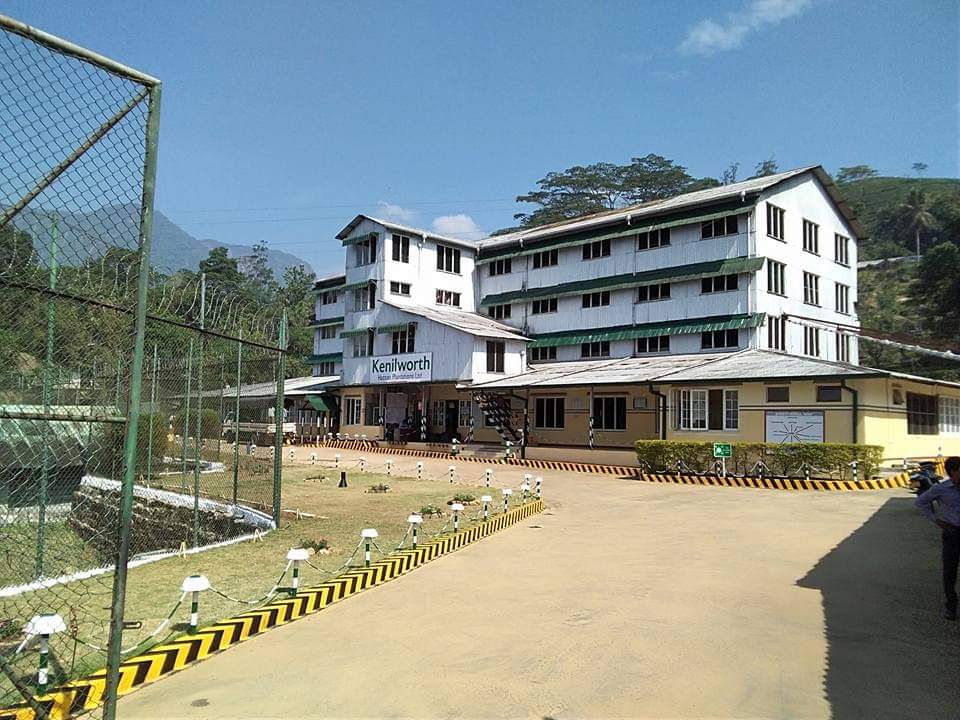
From these 19th-century origins amid the post-coffee shift in Ceylon’s highlands, Kenilworth has evolved into a standards-driven operation, Fairtrade-certified since 2008, anchoring livelihoods, export earnings, and Ceylon tea’s global prestige while echoing the plantation sector’s path from colonial innovation to modern quality and compliance.
Strategic location, historical foundation and ownership evolution
Kenilworth Tea Garden lies in the Central Province, in the Nuwara Eliya District, about 102 kilometres from Colombo and close to the town of Ginigathena. The estate’s name, inherited from Kenilworth Castle in Warwickshire -UK, reflects its origins under British ownership, first managed by M/s Gordon Frazer & Co. Ltd.
Situated between the Kelani and Mahaweli rivers at elevations between 616 and 640 metres, it benefits from an annual rainfall of around 4,500 millimetres spread over roughly 200 days, influenced by both Southwest and Northeast monsoons. This combination of altitude, climate, and water resources has long made Kenilworth an ideal site for medium-grown teas that command strong demand at the Colombo Tea Auction.
The estate’s formal history dates back to around 1880, when British planters transitioned from coffee to tea in the central highlands following the collapse of the coffee industry. Early recorded ownership includes R.P. Rudd (1880–1892), Midland Ceylon Tea Co. (1898–1899), and Kenilworth (Ceylon) Tea Co. Ltd. (1923–1928), reflecting the consolidation of tea assets under corporate ownership in the late 19th and early 20th centuries. The last British planter recorded at Kenilworth was W.R.D. Waller, after which management moved through Watawala Plantations and, from 2019, Hatton Plantations.
Scale and productivity metrics
Kenilworth today stands as a significant production unit. The estate covers a total of 603.11 hectares, of which 295.36 hectares, or 49 percent, are planted with tea. The remaining land supports fuelwood cultivation, forestry, and grass earmarked for future replanting, balancing immediate output with long-term renewal.
Of the tea extent, 86 percent uses high-yielding vegetatively propagated varieties, enabling sustained productivity per hectare. Annual production reaches approximately 560,000 kilograms of made tea from estate fields, equaling a yield of about 1,900 kilograms per hectare, which bolsters both estate profitability and national export volumes. Including bought leaf, factory output climbs to around 800,000 kilograms annually, extending support to smallholders and nearby communities supplying green leaf.
This production scale generates foreign exchange and fiscal contributions while employing a population of around 3,029 residents linked to the estate. Kenilworth’s consistent sale averages enhance value through superior price realization in global markets. Within Sri Lanka’s auction system, strong marks drive price discovery and brand equity. Kenilworth ranks among the top medium-grown marks, often leading prices at the Colombo Tea Auction for its Orthodox teas. This stems from reliable leaf quality, stable liquor traits, and decades of buyer trust. Beyond its own gains, Kenilworth sustains benchmarks for peers and reinforces premium positioning for Sri Lankan teas worldwide. For planters nationwide, it proves that rigorous field care, precise processing, and reputation yield premiums amid global competition.
Agronomic innovation, field diversity and global compliance
Kenilworth extends beyond volume to agronomic progress. Divided into five sections, it features Black Stone Division with its historic pond and British-era mini hydropower, plus Gneissrock Division hosting the Wide Art cultivar. Each section blends unique varieties for field resilience and diversity. A key legacy is the KNK 16-3 clone, developed by the Tea Research Institute using Kenilworth material and now dominant onsite. This interplay of estate practice and national research counters rising costs and climate challenges, vital for Sri Lanka’s edge.
Kenilworth also aligns with international standards through extensive certifications. Fairtrade status arrived in July 2008 as an FLO producer, joined by HACCP, Ethical Tea Partnership, Rainforest Alliance, CQC 2 Star, 5S, SLSI, and SGS. These affirm quality controls, food safety, ethical practices, and environmental care. For Sri Lanka’s export economy, such estates secure market access and premium claims by meeting buyer demands.
Community roots and lasting impact
Kenilworth endures as a vibrant community forged over more than a century of plantation history. Early operations reflected glaring divides between British overseers and Indian Tamil workers amid remote highland isolation, yet today the estate provides structured housing, essential services, and stable employment for thousands of residents.
Its narrative includes stark moments like the 1930s tragedy, where superintendent Mr. Roberts lost his life to a clerk’s desperate act over embezzled funds. Navigating ownership transitions, global market fluctuations, and evolving national policies, Kenilworth consistently drives jobs, rural stability, and export contributions. In essence, Kenilworth Tea Estate exemplifies Sri Lanka’s plantation resilience: from colonial foundations through technical innovation and rigorous standards to a modern anchor of economic value, quality leadership, and community sustenance in the global tea trade.